The Earth We Can’t See: Experiential Works of Art About Place*
by Lilia Rocio Taboada, Curatorial Fellow
The MCA DNA Research Initiative is a multi-year curatorial program, supported by the CHANEL Culture Fund, that invites early-career curators and writers to the museum for interdisciplinary research projects related to the institution’s collection. Focused on the intersection of visual art and performance, this initiative surfaces overlooked art historical narratives within the organization’s history while foregrounding the cross-disciplinary ethos that has been integral to the museum since its founding in 1967.
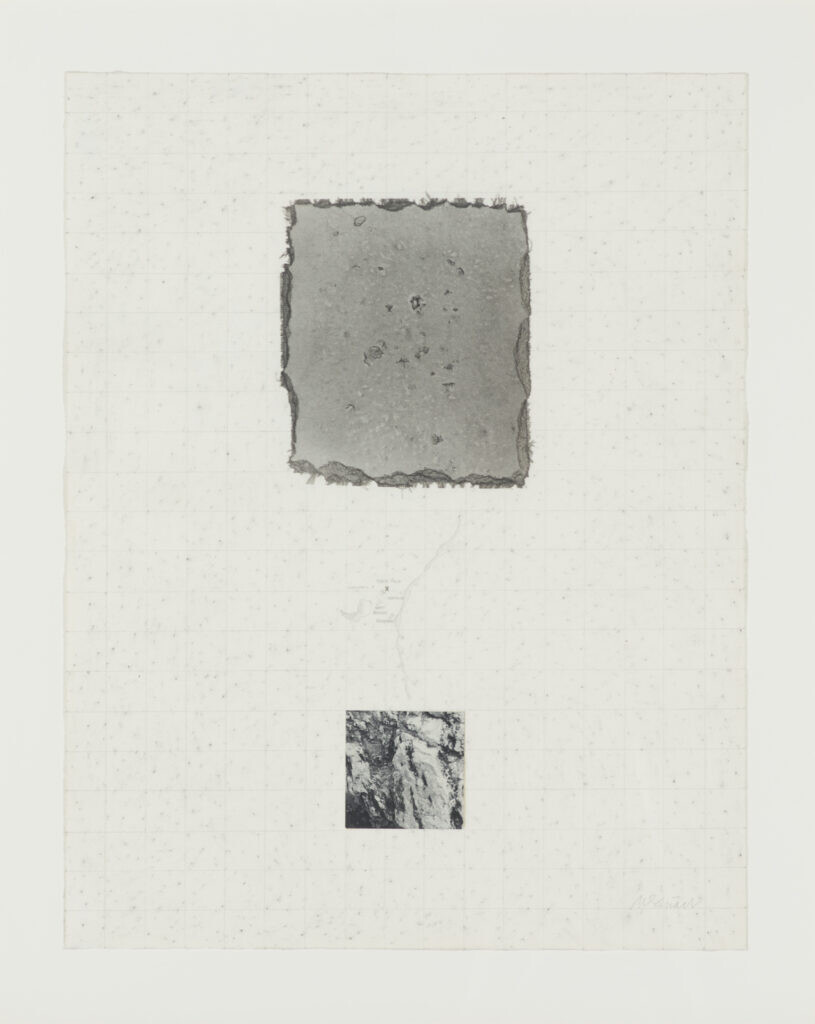
Figure 1. Michelle Stuart, Turtle Pond Site Drawing #36, 1974. Earth, graphite and photograph on paper; framed: 27 3/16 × 22 1/8 in. (69.1 × 56.2 cm). Gift of Robert and Marlene Baumgarten. Photo: Nathan Keay, © MCA Chicago.
In Michelle Stuart’s Turtle Pond Site Drawing #36 (1974; fig. 1), the artist shows her view of where she first developed her signature earth rubbings. Rendering a new form of map, she simultaneously represents a birds-eye cartographic perspective alongside the intimacy of being in that place. Trained first in photography and then with early experience as a topographical draftsperson prior to her work as an artist, Turtle Pond Site Drawing #36 shows Stuart’s attention to an experiential understanding of geography. She communicates what Turtle Pond feels like through a textured and intimate physicality, rather than just what it looks like in an image or on a map. By intervening in the familiar, topographical vantage point of Turtle Pond, Stuart provides a connection between the viewer’s limitations and her own experiences. This image, which can usually only depict its place from a distance, becomes the tangible trace of those experiences—a microcosm of how artists use layers, fragments, and varied materials to articulate the irreducible complexity of a place in their works.
On this small sheet of paper, Turtle Pond reads as a site between several personally significant elements of the location, marked by Stuart with the treasure-map “X” sandwiched between a rough piece of cloth submerged in earth and a photo of boulders stacked up into a wall. The backdrop of this site is dappled with graphite on paper, a rendering of the dirt ground found at the location marked with that X. Stuart extended this dappling to Turtle Pond (1974)—for which Turtle Pond Site Drawing #36 was a study—which is part of a body of scroll frottages, or rubbings, that Stuart began in 1973 while she was working in New York. Works in this series—such as Turtle Pond, #1 Woodstock, NY (1973), and Niagara Gorge Path Relocated (1975)—are geological-scale drawings of a place: they index a location at the scale of the actual terrain, grounded in what scholar Anna Lovatt describes as “pervaded by a photographic logic despite the absence of actual photographs in their production.”[1] This body of work connects closely to art historian Rosalind Krauss’s concept of the index, used widely in contemporary art since the 1970s. Krauss defines the index as a sign “distinct from symbols . . . [which] establish their meaning along the axis of a physical relationship to their referents. They are the marks or traces of a particular cause, and that cause is the thing to which they refer, the object they signify.”[2] One can imagine the force of Stuart rubbing graphite into each scroll unfurled across the terrain, using her palms to generate a visual memory with the indexical power of the camera, but through physical means. In viewing these two representations of Turtle Pond side-by-side, Stuart’s scroll and drawing layer fragmentary elements to communicate the experiential whole as the referent, seeking verisimilitude that takes experience into account.
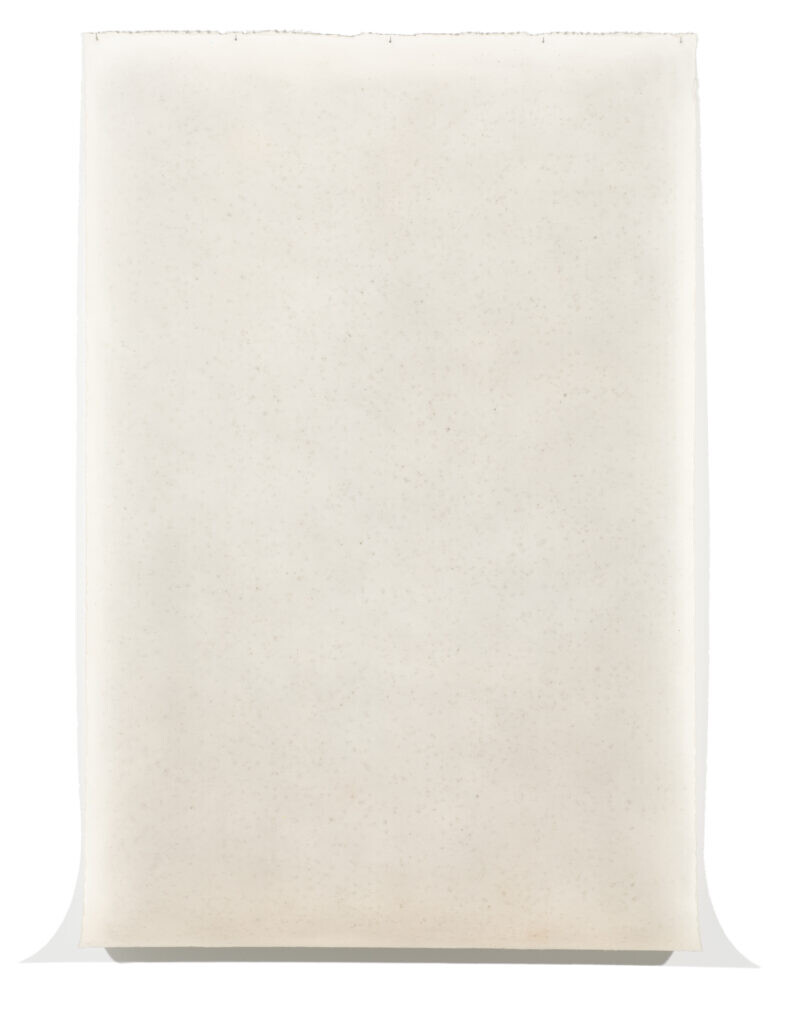
Figure 2. Michelle Stuart, Turtle Pond, 1974. Earth and graphite on muslin-mounted rag paper; 96 3/8 × 62 1/2 in. (244.8 × 158.8 cm). Gift of Robert and Marlene Baumgarten, 1977.22. © 1974 Michelle Stuart. Photo: Nathan Keay, © MCA Chicago.
Stuart’s experiential method offers a way to communicate a place to people further afield. Her approach renders the scale of a place one might never have been, describing emotional, political, and geological meaning as much as physical amount. While her creation of a Kraussian index connects back to photography and her topographic training, similar relationships of holistic physicality appear in the work of video artists, whereby stitching together scenes, narrative, and layers of text onto the moving images of a place they explore alternative ways to communicate meaning through experience. It is not just the flat visual image of a landscape that communicates the importance of an ecology, but also the sounds of birds overlapping with children playing, the scent of fruit that grows more fragrant when cracked open by humans and animals alike, or the prose or song that reflect decades (if not centuries!) of inhabitants in a land. In video, despite a primarily photographic rendering of place, artists have found ways in which to articulate details like these that fade into the background, tightening the viewfinder onto what might go unnoticed. Where Stuart adds a remnant covered in earth or an image of a rock wall onto the frottaged backdrop, video artists add music or text onto the panning geographic footage.
Fragments—in Stuart’s work and in moving image—are a part of a whole: a piece of a puzzle. The puzzle comes together similarly through video’s multimedia elements and Stuart’s layered images in fabric, text, rubbing, and photograph in Turtle Pond Site Drawing #36. In this way, Stuart offers a pathway to see an existing world where scene by scene, layer by layer, distance—never unmediated—is shortened to the point that we feel the texture of a space that we might never know. Likewise, David Hartt, Jumana Manna, and Beatriz Santiago Muñoz show us how artists communicate multiple worlds, often conveying narratives that are hidden or deemed minor. Layer by layer, they each lead us through the contested histories, presents, and futures that sediment within a location—like the earth Stuart rubs, photographs, and images into each surface.
David Hartt, The Histories
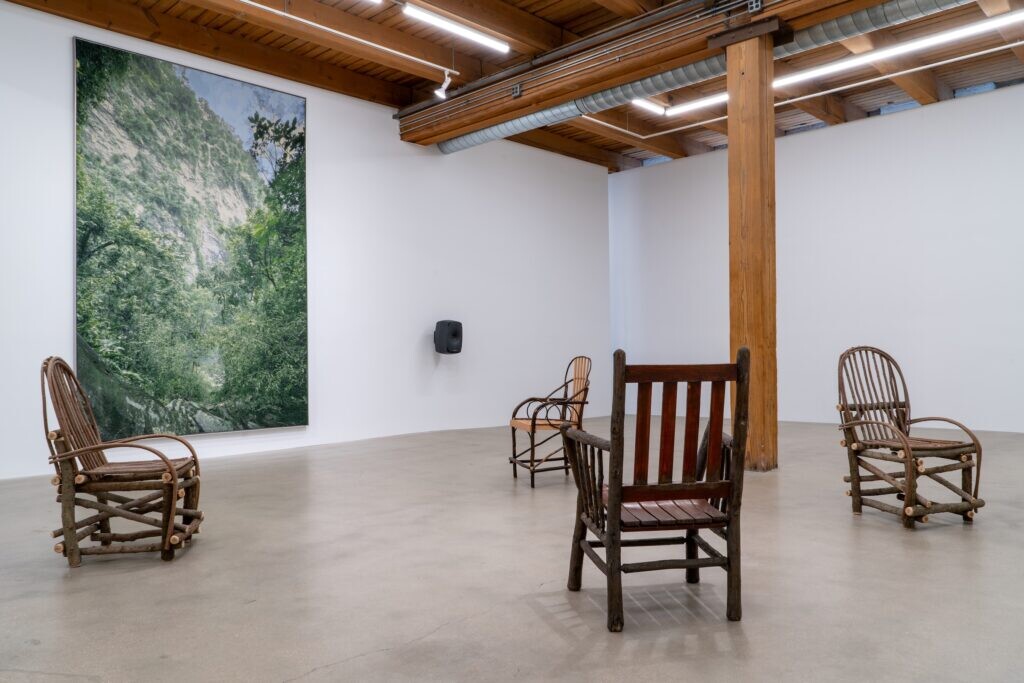
Figure 3. Installation view, David Hartt, The Histories (Old Black Joe), Corbett vs. Dempsey, September 18–October 23, 2020. Polyester, cotton, wool, polyester cotton, acrylic, cashmere, wood, metal nails, and quadraphonic digital audio; dimensions variable. Museum of Contemporary Art Chicago, gift of Kerry James Marshall and Cheryl Lynn Bruce. Photo courtesy Corbett vs. Dempsey.
David Hartt finds ways to reframe real and imagined histories within the United States and the Caribbean. His installation The Histories (Old Black Joe) (2020) takes a close look at a sense of place in Ohio and Trinidad through painting, music, and landscape–each of which are disciplines used to enact control and erasure across the Americas.[3] Often working through moving image, installation, and photography, Hartt brings new media to comingle: two tapestries, a group of chairs, a quadraphonic soundtrack, and two photogravure prints. Ohio and Trinidad are alluded to through two invisible protagonists and landscape painters, Robert Seldon Duncanson, from the United States, and Jean-Michel Cazabon, from Trinidad. The painter’s names title the tapestries of visibly lush landscapes. The rustic empty chairs facing the tapestries also reference these figures, echoing a daguerrotype portrait of Duncanson in a bentwood chair from 1864.[4] The sound component of The Histories reinforces the dialogue between Cazabon and Duncanson, and across the geographies of Trinidad and Ohio, as a Calypso-infused composition of the song “Old Black Joe” plays. This song was lauded by W. E. B. DuBois in The Souls of Black Folk and, for Hartt’s installation, was commissioned by classically trained musician Van Dyke Parks. These various elements in the room, on face value, offer a simplified understanding of US and Caribbean histories as analogous experiences where control of a culture is tied to control of a place. Hartt’s interventions, however, present a more complex narrative: one where–like Stuart—he creates indexes of overlapping senses and experiences to achieve representations of unfixed and continuous immensity rather than contained, parallel perspectives.
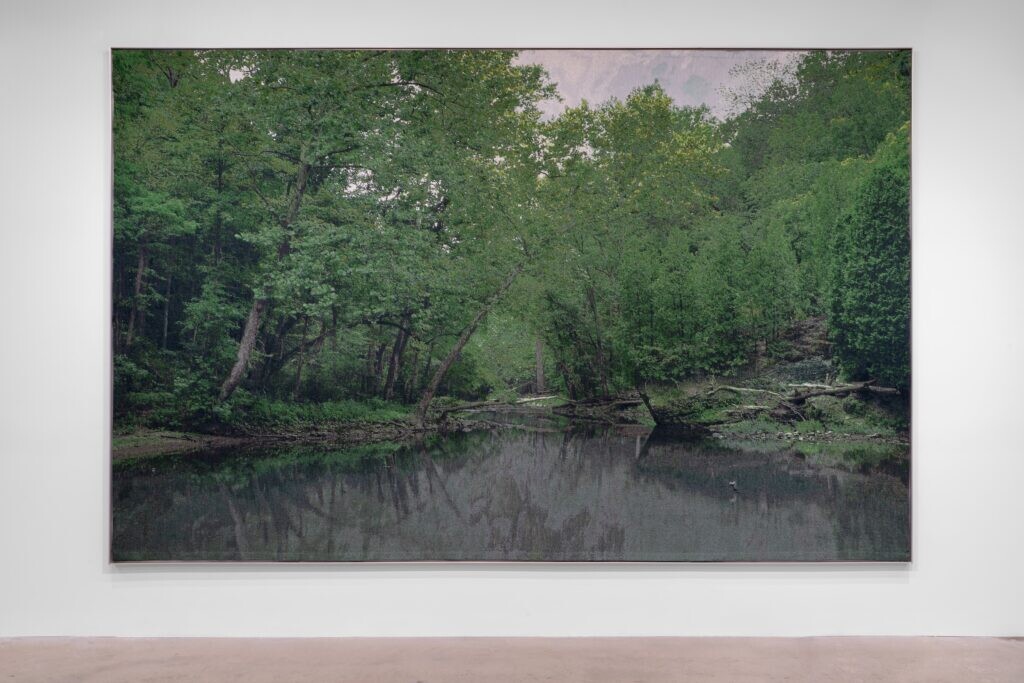
Figure 4. David Hartt, The Histories (after Duncanson), 2020. Tapestry (polyester, cotton, wool, polyester cotton, acrylic, cashmere); 113 1/16 × 174 in. (287.2 × 442 cm). Museum of Contemporary Art Chicago, gift of Kerry James Marshall and Cheryl Lynn Bruce. Photo courtesy Corbett vs. Dempsey.
The tapestries—one element of this multifaceted work—are where Hartt shows us this Stuart-like approach most clearly, intentionally blurring stories of the US and the Caribbean. The tapestries, individually titled The Histories (After Duncanson) and The Histories (After Cazabon), show landscapes in Ohio and Trinidad. Duncanson is understood as the first Black landscape painter and part of a second generation of the Hudson River School, whose works depict unpopulated and beautiful views of Cincinnati, Detroit, and locations across the broader US Midwest and Canada during the 19th century. Cazabon, also working during the 19th century as part of the French Barbizon School, and was the first Trinidadian painter to gain international acclaim for his landscape and genre scene paintings. The son of immigrants from Martinique of European and African descent, he was known for painting depictions of political events, European and mixed-race colonial elites, and stunning views of Trinidad that paved the way for future French tourism. Each artist created visuals of purportedly untouched, uninhabited places within the landscape painting tradition—the silent partner within colonial Westward expansion and development of the Caribbean—even while representing unique perspectives within colonial landscape production. Hartt, in an expedition of his own, plays with the complexity that their practices represent in a broader historical context by traveling to Little Miami River and Maracas Falls, locations where each painter worked. Hartt photographed each site, then created composites from multiple photographs to depict a single location in his tapestries. The resulting works are ultimately indexes not just of each place, but of the experienced histories that the places represent. Little Miami River, for instance, was painted by Duncanson as an idyllic locale at the same time that it was an active site of the Underground Railroad.[5]
Hartt’s inclusion of “after” in his titles points to another type of index in his work, as a phrase to point to imitation, replication, homage, and style in the work of one artist referencing that of another. “After” acknowledges Hartt’s imitation of Duncanson and Cazebon, albeit through different mediums, and—as a play on words—also highlights the life of these landscapes after their painterly construction. The installation’s sonic element reinforces this broader chronology. While each tapestry is a composite of original locations that appear untouched between their 19th-century paintings and Hartt’s work, the musical accompaniment of “Old Black Joe”—a 19th-century parlor ballad—is blended and mixed with various contemporary sounds. This musical “after” includes sirens, marimbas, steel drums and dogs barking. Hartt renders a cheerful song from US history in a Caribbean style, with undertones that communicate a sinister edge much in the same way that the landscape tapestries appear almost eerie in their verisimilitude. As Hartt’s combinations show, whatever comes “after” all of the visual and sonic historical references is not necessarily clear skies and happy rhythms. Moreover, the soundtrack tells the viewer that perhaps Hartt sees himself in alignment with Cazabon and Duncanson, working similarly to portray a complicated, unfixed sense of place. As a full installation, like Stuart, the experience of a place—Ohio or Trinidad—is Hartt’s desired vantage point rather than its exact representation. As he stated about his practice, “For me, point of view is not just the static appraisal of a scene, or a vantage point. It’s also the time that one takes to look.”[6]
Jumana Manna, A Magical Substance Flows into Me
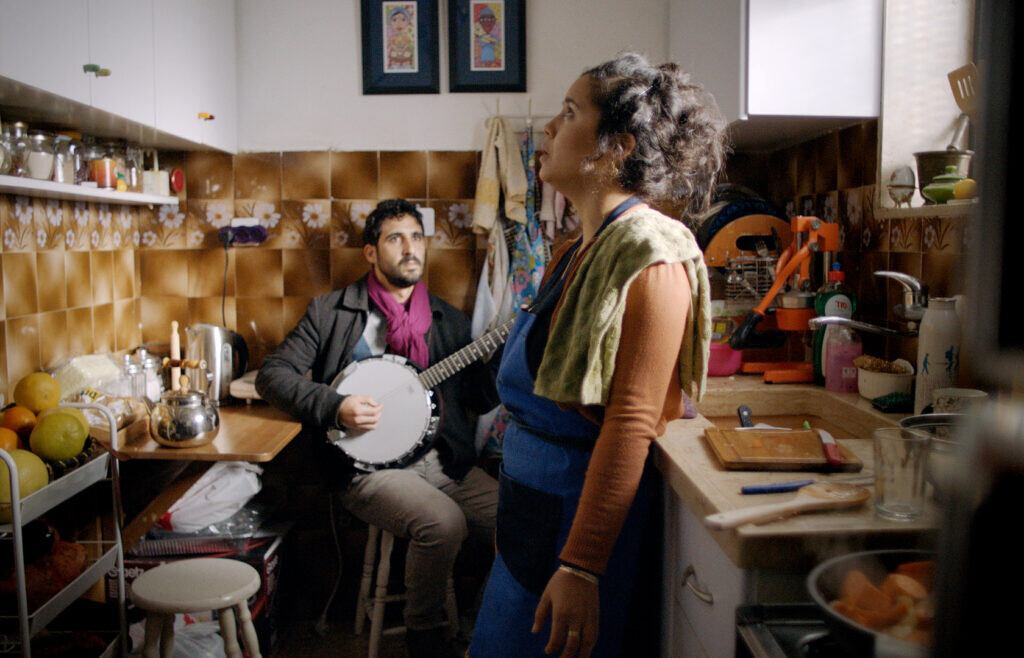
Figure 5. Jumana Manna, still from A Magical Substance Flows into Me, 2015. Digital video (color, sound); 66 minutes. Museum of Contemporary Art Chicago, gift of the Albert A. Robin estate by exchange. Image courtesy the artist.
Jumana Manna takes another temporal approach through music, however her layers are the sonic voices of story shared in tandem. In A Magical Substance Flows into Me (2015), Manna revisits the sites documented in Oriental Music, a radio show from 1936/37 hosted by Robert Lachmann, a German Jewish musicologist. Lachmann traveled, sought out, and recorded performances of music styles by ethnic and religious communities in Mandatory Palestine. While the resulting recordings offer a singular collection of music, Lachmann’s work reflected a broader conservative stance in comparative musicology that was averse to musical syncretism, and especially to Western influences on Middle Eastern and North African musical traditions.[7] This stance placed Lachmann’s work in direct opposition to the hybridity that naturally occurs in musical systems. Despite the breadth of the collection, in Oriental Music Lachmann reified a canon of seemingly unchanging folk traditions as the product of his contemporaneous ideology.[8] Much like Hartt’s attention to the construction of a landscape through painting, Manna’s work acknowledges musicology’s construction through anthropology and the scientific method. In Lachmann’s case, Manna shows how ethnographic studies of the early 20th century built upon the colonial expansion of the 19th century to exacerbate existing power dynamics. Like the historical complexity that Hartt points to by studying Cazabon and Duncanson, Manna looks at Lachmann’s study to unveil structures of colonial hegemony that continue to permeate communities in modern-day Palestine and Israel.[9]
Manna takes on Lachmann’s attitude toward musical syncretism, unravelling the systems of power that his rigid musicological definitions supported. While Lachmann strongly and publicly expressed a pacifist Zionist stance, his participation in externally delineating Middle Eastern traditions remained part of a type of “soft” colonial power used to separate multifaceted communities into Arab, Jewish, and many other categories.[10] In the artist’s words, “My film suggests an alternative form of sovereignty, one that disrupts the constructions of Zionism, and renders visible the complex interdependency of identities that were falsely made discrete from one another.”[11] A Magical Substance Flows into Me revisits and re-documents Oriental Music’s described traditions through a humanistic approach to contemporary artists from those communities. Manna engages in dialogue with each musician about how their practice was passed down and the way that their community—often still minority ethnic or religious groups within the region—are represented or supported by society.
Within this feature-length work, one segment is particularly akin to Stuart’s Site Drawing, offering a glimpse into Manna’s use of layering to articulate an index of experiences through her work. Manna’s version of a study is a segment with a Jewish Moroccan couple in their kitchen, Neta Elkayam and Amit Hai. Elkayam sings and Hai plays the mandolin, performing the Moroccan song “Al-Touhami bin Omar [My Beloved, Care Not to Forget Me]” in Katamon, Jerusalem.[12] Deemed “Programme 3” within Manna’s reconstruction of Lachmann’s study, Manna focuses on Elkayam as she cooks and speaks with the artist. Elkayam explains her family’s story in Israel: how their community of Moroccan Jewish immigrants was warm and friendly with their Arab neighbors, and how they maintained their Moroccan Jewish culture within societal pressure to reject their Arabic community and traditions. An interlude from Lachmann’s notebooks, read by Manna, explains that Lachmann had to play records for the original episode, as he purportedly could not find musicians to perform “pure” Moroccan Jewish music. Manna quickly cuts to Elkayam and Hai performing the very song that Lachmann failed to present live, with a pot of spiced vegetables steaming away on the stove. These three fragments—music, food, archive—together convey an experience of identity that Lachmann’s recordings and studies fail to achieve. An experience full of vibrant smell, sound, and sense of self are visible, all core ingredients to the agency of Elkayam and Hai’s community in the face of pressures to assimilate to social and cultural boundaries that have been redrawn by Zionism. The sense of textured life that Manna conveys in this scene is her technique to articulate a full sense of place, a geographic and cultural landscape, even through individually contained vignettes of each community’s stories.
Where Lachmann’s work neglects traditions beyond the boundaries of perceived folk authenticity, Manna looks to those gaps in Oriental Music to communicate the stories and trauma that took place in Palestine and Israel as Arab and Jewish communities were driven into opposition.[13] Trauma, like place, is a multisensory and sociological experience. As art historian Hanan Toukan states in an essay on this work, “while [Manna’s] experimental documentary is clearly about the memory that lies in the sound of music, it is equally about touch, smell, and taste as corporeal forces in remembering violence and ultimately surviving it.”[14] This method of fragmentation is key to depict these mutable terms of place, and violence. As Stuart uses frottage to generate an image of the ground, capturing her touch at a given site, Manna also depicts place through the various corporeal forms of experience linking past to present story by story from one musical ethnography to that of a distant neighbor.
Beatriz Santiago Muñoz, Oriana
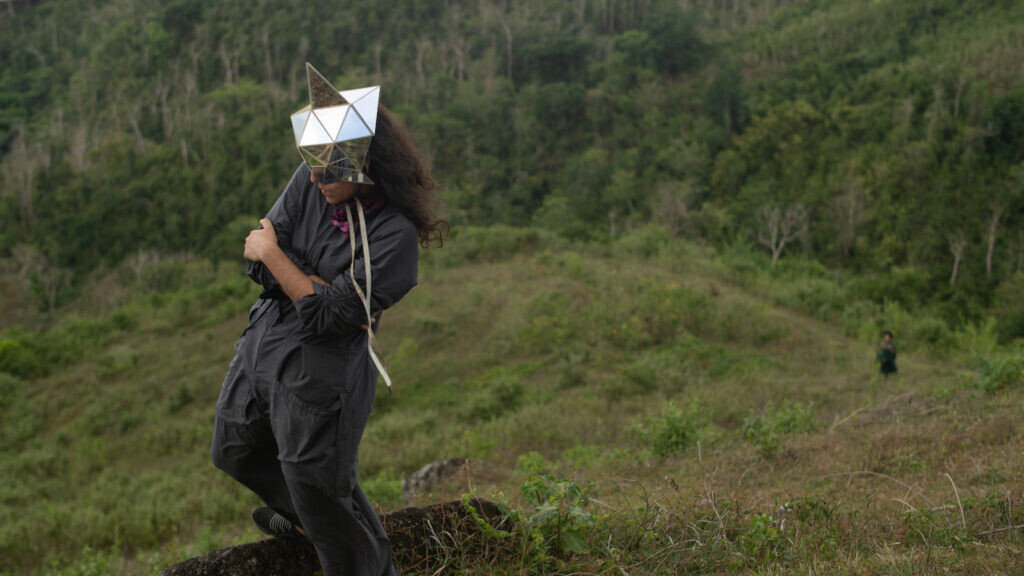
Figure 6. Production still from Beatriz Santiago Muñoz’s Oriana, 2022. Photo: Bleue Liverpool.
Like Manna, Beatriz Santiago Muñoz’s work links fragments through the minutia of the cut and edit. For Oriana, her editorial finesse shines through not just footage, but through language as an experience. Language as sound tells a story—distinct from the musicological research methods Manna uses—as Muñoz combines fractured dialogue across scenes into a landscape’s diegetic noise. Throughout her practice, the artist plays with the genre of anthropological documentary film, experimenting with real and imagined experiences to create new perspectives on where she is working, be it Puerto Rico, Haiti, or Alsace.[15] Oriana develops its ideas of place from narratives, inspired and structured by the gendered idea of language in Les Guérillères, a novel by writer and philosopher Monique Wittig. In Les Guérillères, Wittig depicts a lesbian society of women who use armed resistance to exist on their own terms, without men. Wittig restructures language as part of this approach to Women’s Liberation in what is understood as a feminist text spanning philosophy and literature alike.[16]
Watching the film, Muñoz seemingly builds the sounds, smells, touch, and scenes where Wittig’s feminist society would take place. She creates the setting for this liberated world in an unknown future. Oriana has a tropical backdrop that is never grounded in one location but, to a viewer, is undeniably Caribbean. Understandably so, as the Caribbean is a space where multiple conceptions of time historically meet and coexist.[17] Muñoz builds a world where river, jungle, forest, greenery, vines, grass, and moss all reign as freely as the femme protagonists and the sense of time. Even indoor scenes feature herbs, flowers, and fruits. So too do the film’s sonic compositions play with Wittig’s ideas around the gendered power of language, fragmenting conversation into noise that leads the viewer between the verdant environments, the cosmos, and back to inhabited, earthly scenes of rebellion.
Muñoz costumes her actors in “malascopios,” mirrored sculptures created by the artist. These scenes provide a Kraussian index within the work, like Stuart’s Site Drawing, where the place—here operating not through the experience of shared history of a region, but through gender—is fragmented into the mirror’s surface and inferred through those pieces. Malascopios, roughly translated from Spanish to English as “to see wrong,” are used by Muñoz throughout her works in moving image to disrupt the camera’s frame and often invert sky, land, and sea.[18] This use takes place in Oriana, where two characters use malascopios in different ways. One in the foreground fragments the backdrop, visually placing the sky into the landscape through her costume, while the other uses the reflective item to communicate. Both invert the landscape as another method to restructure the real world into the systems of the work’s imagined world. What is perhaps even more enticing is that when the malascopio is shown as a tool for communication, it uses the landscape to generate visual communication alongside the sounds that echo throughout the work’s audio.[19]
Here, the index of the actual, physical land is the fragment with a mirrored representation, drawing focus onto the means of that representation itself. Muñoz’s index points to communication—another part of her approach to Wittig’s story where language holds new forms. Muñoz’s malascopios create a frame within the camera frame, placing her approach to seeing differently inside Wittig’s narrative of speaking differently, the frame that structures Muñoz’s overall work. Much like Stuart’s early training in topography, Muñoz applies her background in documentary film to focus on overlapping elements, repurposing means of representation to move beyond “seeing” into other modes, following the characters’ reinvention of language. In witnessing the malascopios’ refracted indices, the viewer experiences multiple realities where Wittig’s approach to Women’s Liberation is enmeshed with an actual reality of the Caribbean and is also part of Muñoz’s vision for an alternate future.
Sediment, or what we can learn
In an essay from 1981 about Michelle Stuart’s practice, curator Holliday T. Day wrote, “What is the purpose of an artwork that teeters between illusion and reality yet never, like trompe l’oeil paintings, makes a game of ‘Is it real?’ The purpose lies in the discovery that the dichotomy of illusion and reality is not a game but a fundamental of history, of life itself.”[20] While inspired by Stuart in 1973, this same ethos rings clearly 50 years later as artists find ways through sound, image, video, and more to communicate the ongoing dichotomy between illusion and reality in shifting identities of place—really, in an extension of the self. Each artist is working through a humanistic understanding of these convoluted nation-state, regional, and gendered categorizations. Much like Michelle Stuart rubbing the texture of dirt into a scroll, Hartt, Manna, and Muñoz take the time to tell us what a place feels like, what it sounds like, what the minutia of physical and sonic texture are like. These are details that are often missed in streamlined ethnographic accounts of the same coordinates.
Moreover, specific places—whether a neighborhood, a parcel of land, or entire nation-states—will always be contested. As these artworks show, identifications are an arbitrary process. The experience within and surrounding the perimeters of a place are what give the identifications meaning, be it the definition of an island, nation, or site. In exploring the production of place, these artists’ works are as effective as any evidentiary photograph or document to create an alternate identification—one that speaks to the existence of multiple perspectives rather than the singularity of a static image. Following the views that these artists show us, we can reach beyond documentation or cartography while still responding to places beyond our own, or learning about the many versions of a place where we reside. It is a distinctly humanist exercise of curiosity to witness the depth and breadth of the world through such experiences. In many ways, these works are a map, but like Day noted back in 1981, if Stuart, Muñoz, Hartt, or Manna were to draw us a map it would always point towards a “place” that is equally illusory and real.
Notes
Many thanks to the MCA staff members who supported and guided this research and essay: Nolan Jimbo, Iris Colburn, Mary Richardson, Marisa Szpytman, Jamillah James, Jadine Collingwood, Jack Schneider, Joey Orr, Katie Levi, Gabrielle Banks, and especially Elijah Teitelbaum for his editorial finesse.
* The title of this essay is inspired by a statement by Michelle Stuart regarding the materials and process to create her 1970s works on paper:
[Michelle Stuart] That’s earth smashed into the paper.
[Annette Leddy] It’s so white.
[Stuart] Well, you can’t see the earth. It was rubbed into the paper though. It was a lighter earth . . .
Michelle Stuart, interview by Annette Leddy, November 13, 2015, transcript, Smithsonian Archives of American Art, aaa.si.edu/download_pdf_transcript/ajax?record_id=edanmdm-AAADCD_oh_373755.
1. Anna Lovatt, “Palimpsets: Inscription and Memory in the Work of Michelle Stuart” in Michelle Stuart: Drawn From Nature, ed. Anna Lovatt (Hatje Cantz, 2013), 10.
2. Rosalind Krauss, “Notes on the Index: Seventies Art in America,” October 3 (Spring 1977): 70.
3. The work discussed is the second cycle of The Histories, a larger project by Hartt installed in three locations throughout 2020–21. First was The Histories (Le Mancenillier) at Beth Sholom Synagogue, Elkins Park, PA; The Histories (Old Black Joe) is in the MCA Collection, but has only been on view at Corbett vs. Dempsey in Chicago; third is The Histories (Crépuscule), which was installed at the Philadelphia Museum of Art, Philadelphia, PA.
4. Solveig Nelson, “After David Hartt’s The Histories” in The Histories, ed. David Hartt (Inventory Press, 2022), 65.
5. Nelson, 67.
6. David Hartt, “The Windmill Is Not the Giant: David Hartt in Conversation with Darby English,” interview by Darby English, in Stray Light (Columbia College Chicago Press, 2013), cited in Nelson, “After David Hartt’s The Histories,” 67.
7. Ruth F. Davis, “Ethnomusicology and Political Ideology in Mandatory Palestine: Robert Lachmann’s ‘Oriental Music’ Projects,” Music & Politics 4, no. 2 (Summer 2010): 3–4, 8–9.
8. Ruth F. Davis, “From Wax Cylinder to Metal Disc: Transplanting Robert Lachmann’s “Oriental Music” Project from Berlin to Jerusalem on the Eve of World War II,” in “Access to Waxes – The Collections from the Arab World of the Berlin Phonogramm-Archiv: Interdisciplinary Perspectives on Digitization and Open Access Publication,” special issue, the world of music (new series) 12, no. 2 (2023): 129.
9. Davis, “Ethnomusicology and Political Ideology in Mandatory Palestine,” 5–6.
10. Davis, “Ethnomusicology and Political Ideology in Mandatory Palestine,” 11–12.
11. Jumana Manna, “A Magical Substance Flows into Me,” in Forum Program 2016 (Berlinale Forum, 2016), 15.
12. Manna, 15.
13. The Great Arab Revolt in Palestine took place from 1936 to 1939, following the beginnings of Lachmann’s studies, and sharpened divides among communities in Mandatory Palestine. In the midst of this conflict, in 1937, the British government published the Peel Commission’s recommendation for Palestine to be partitioned between Arab and Jewish states. This lay the groundwork for the Nakba in 1948 when the State of Israel formed, understood as the pinnacle of “catastrophe” for Palestinian people, and continuing trauma from violent enforcement of those boundaries. Information and further resources on the Great Arab Revolt and the Nakba are accessible on The Interactive Encyclopedia of the Palestine Question, a dedicated platform created by the Institute for Palestine Studies in a joint project with the Palestinian Museum. See Alex Winder, “Great Palestinian Rebellion, 1936-1939,” The Interactive Encyclopedia of the Palestine Question, accessed April 27, 2026, palquest.org/en/highlight/158/great-palestinian-rebellion-1936-1939; and Michael Fischbach, “IV. The Palestine War and the Nakba: 1947-1950,” The Interactive Encyclopedia of the Palestine Question, accessed April 27, 2026, palquest.org/en/node/31109.
14. Hanan Toukan, “Film Review: Music, Borders, and the Sensorial Politics of Displacement in Jumana Manna’s A Magical Substance Flows into Me,” Jerusalem Quarterly 67 (Autumn 2016): 122.
15. Muñoz has another linked work, Oenanthe, a companion to Oriana also about Wittig. Oenanthe was shot close to the town of Dannemarie in Alsace, France, where Wittig grew up.
16. In 1971, literary critic Sally Beauman deemed the book, “the first imaginative work of fiction in which the battle between the sexes is fought in Women’s Liberation terms.” Sally Beauman, “Women without men, except to kill for fun and survival,” The New York Times, October 10, 1971, BR5.
17. This idea, grounded in writing by Antonio Benitez-Rojo, is thoroughly explored in the arts by curator Carla Acevedo-Yates in “Forecast Form: Reframing the Caribbean through the Mechanics of Diaspora,” Forecast Form: Art in the Caribbean Diaspora, 1990s-Today (Museum of Contemporary Art Chicago, 2022), see 28.
18. As Muñoz describes it, “My video works are all objects to break the rational plane of the camera.” Beatriz Santiago Muñoz, “In the Studio: Beatriz Santiago Muñoz: A Universe of Fragile Mirrors: Experiencing the Materiality,” interview by Jan Castro, March 1, 2017, sculpture.org/blogpost/1810776/348739/In-the-Studio-Beatriz-Santiago-Munoz-A-Universe-of-Fragile-Mirrors-Experiencing-the-Materiality.
19. This use is similar to a heliograph, a tool used to create long-distance, optical communication through mirrored reflections of the sun during the 19th and early 20th centuries.
20. Holliday T. Day, I-80 Series: Michelle Stuart (Joslyn Art Museum, 1981), n.p.
About the Author

Image courtesy of the author.
Lilia Rocio Taboada is an arts researcher, writer, and curator specializing in archival research and collaborative artistic practices since 1945. She is currently Associate, Programs and Editorial at the Skowhegan School of Painting & Sculpture, and was previously Curatorial Associate in the Department of Media and Performance at the Museum of Modern Art, New York. She holds an MA in Art History from the University of Texas at Austin and a BA in World Arts and Cultures from the University of California, Los Angeles, and is the recipient of a 2025 Andy Warhol Foundation Arts Writers Grant.
Funding
The MCA DNA Research Initiative is supported by the CHANEL Culture Fund.