Christina Quarles, Never Believe It’s Not So (Never Believe / It’s Not So), 2019
Christina Quarles
b. 1985, Chicago, IL; lives in Los Angeles, CA
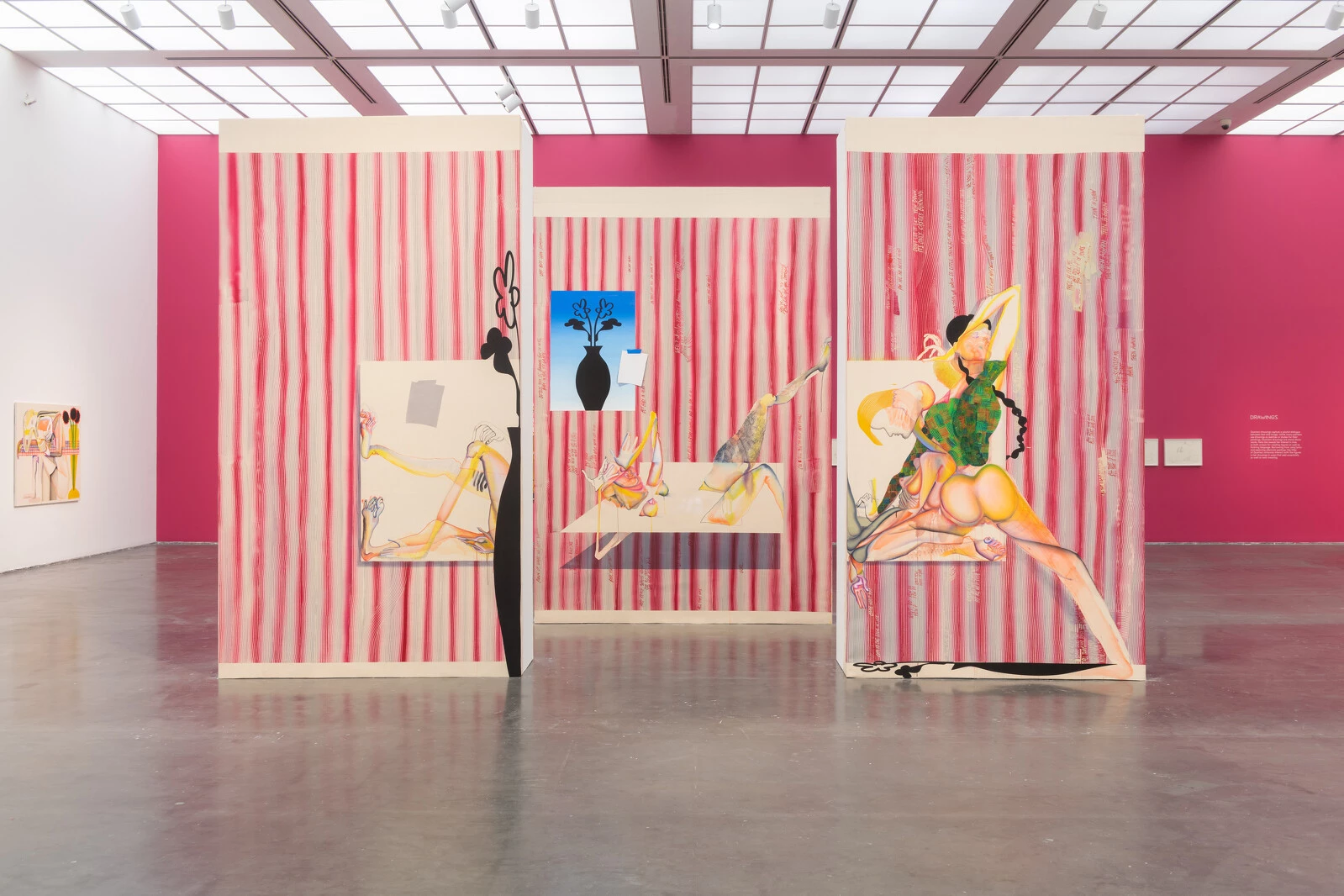
Never Believe It’s Not So (Never Believe / It’s Not So), 2019
Acrylic on canvas
Gift of Alireza Abrishamchi
Christina Quarles is an artist who paints familiar scenes in unfamiliar ways. Through dynamic experimentation with abstraction and representation, Quarles paints figures that crouch, stretch, and tangle in ways that fragment, dissolve, and merge their bodies. The paintings are deliberately ambiguous: there is no fixed definition or interpretation. What you see will likely differ from what another person sees.
This openness reflects Quarles’s perspective on identity—that it cannot be reduced to a single quality or characteristic. Rather than creating portraits based on appearance, Quarles paints her experience of living in a racialized, queer, and gendered body. Quarles also uses language in her work to challenge stable, definite meaning; for example, by using phonetic spelling in her artwork titles, she introduces multiple ways of reading the same phrase.
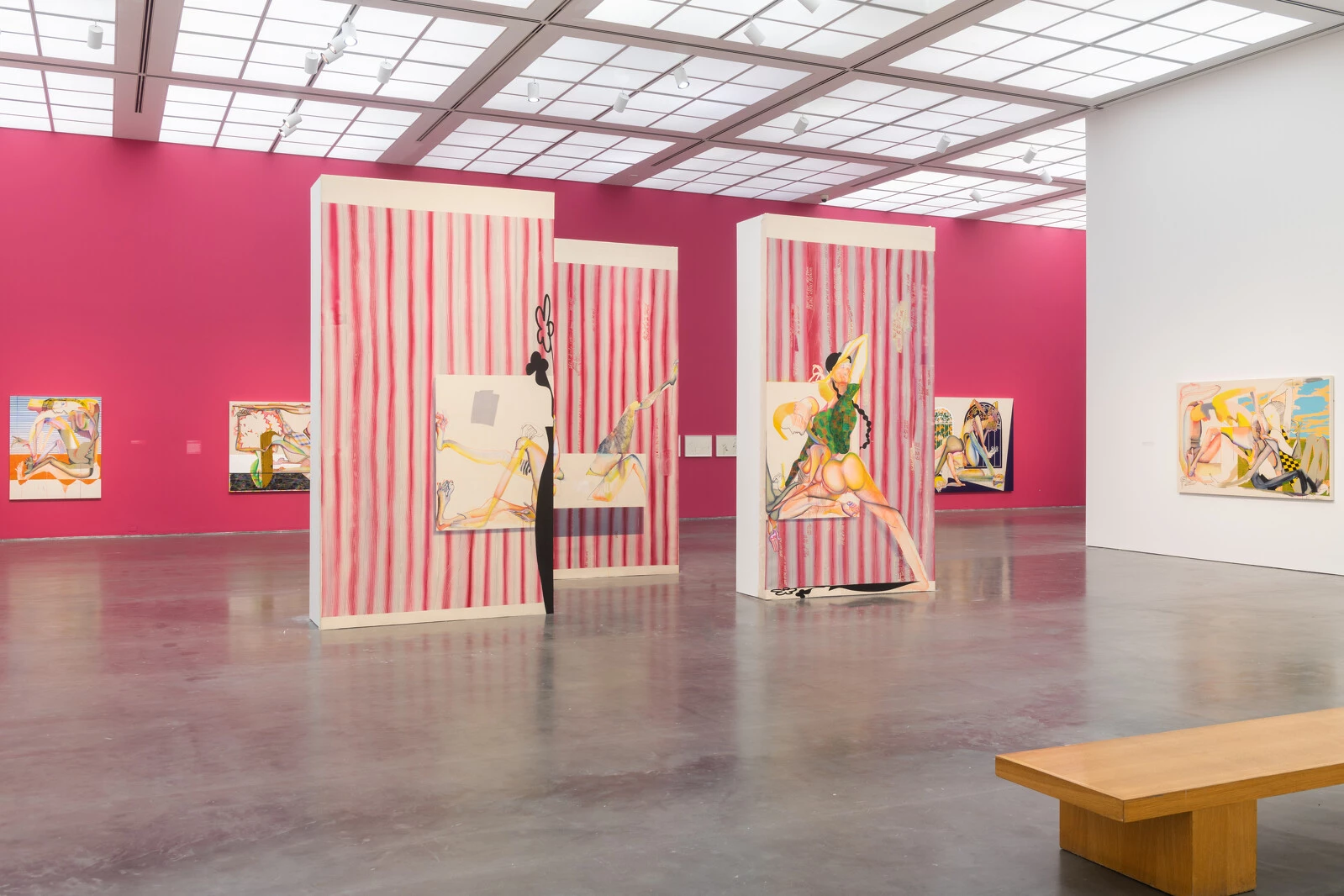
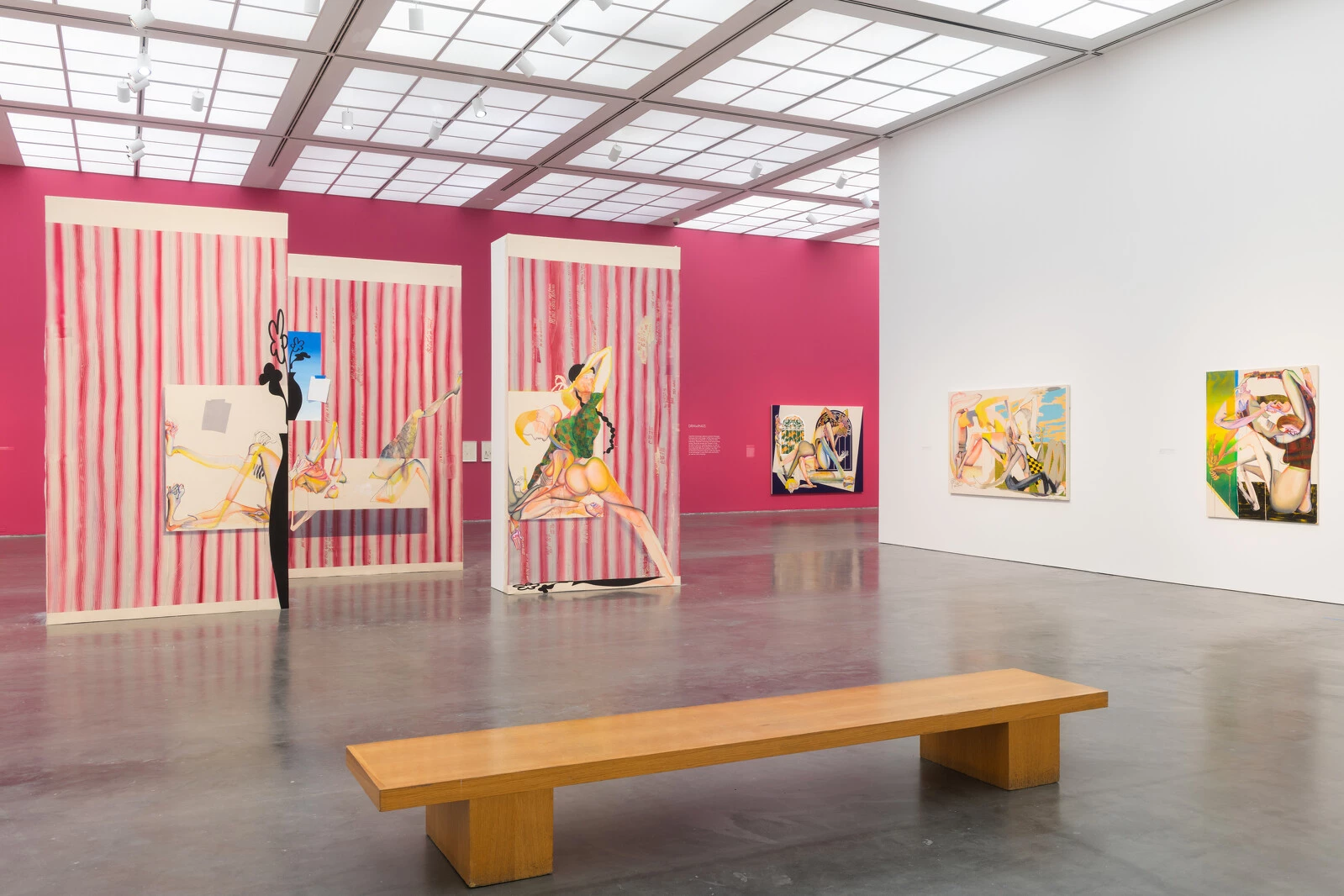
Never Believe It’s Not So (Never Believe / It’s Not So) entered the MCA Collection in 2020, just before the museum presented the exhibition Christine Quarles. As exhibition curator Jack Schneider wrote at the time:
As this work’s title suggests, illusions are at play in this painting, which appears to be a wall covered in red-striped wallpaper with paintings hanging on it. The scene is undermined by the figures in each painting, whose limbs spill out of their frames. Other details in the painting, such as the note seemingly fixed to the wall with blue tape, play into the uncertainty. Quarles used the technique of trompe l’oeil, a traditional type of painting that uses light and shadow to trick the viewer into believing that the painting extends into real space. Quarles draws the viewer into a close engagement with the painting, challenging us to explore our own perceptions of illusion and reality in painting and in the world at large.
—Jack Schneider, Assistant Curator