Kenzi Shiokava
Jun 27, 2026 - Jan 31, 2027
About the Exhibition
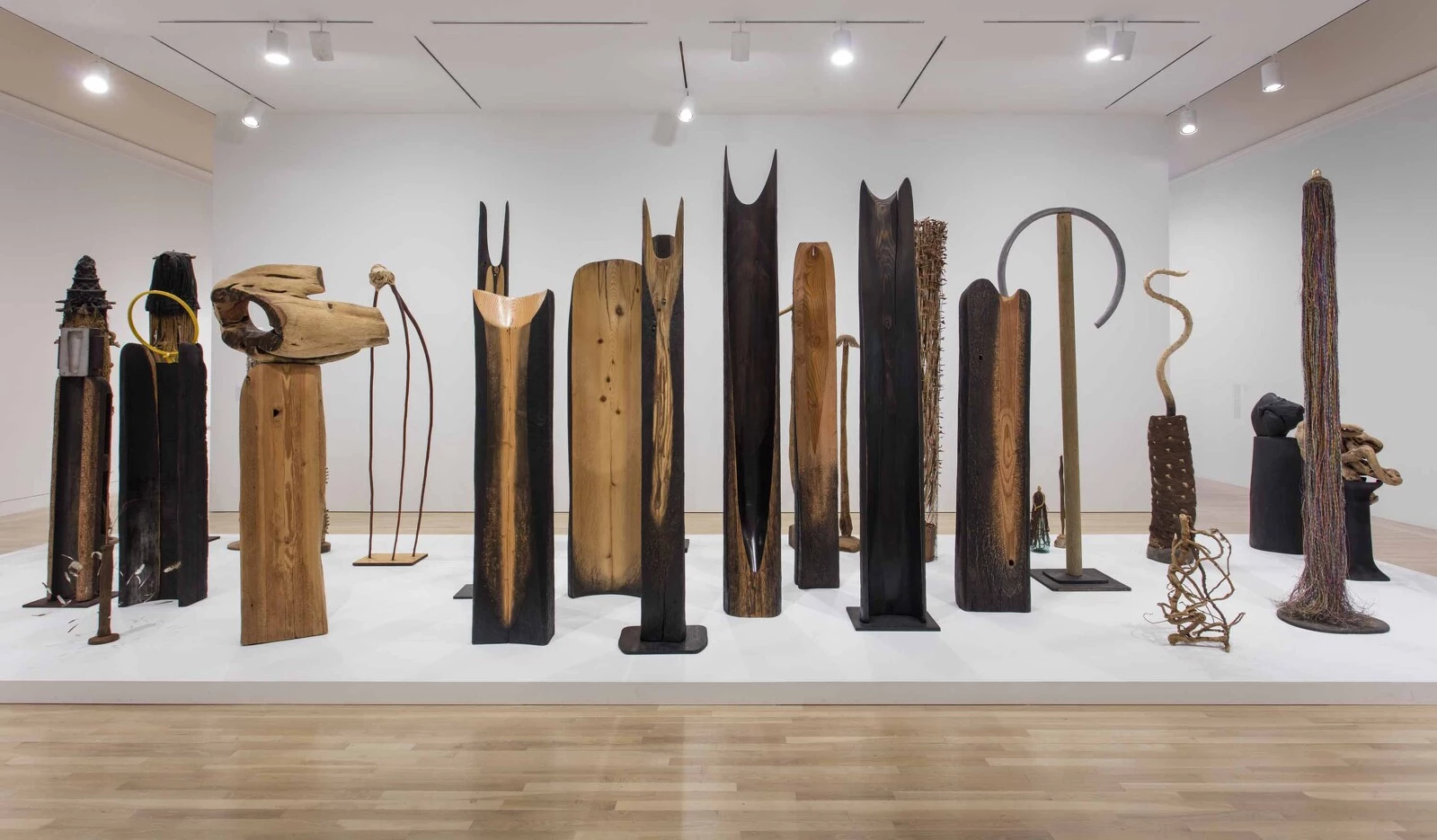
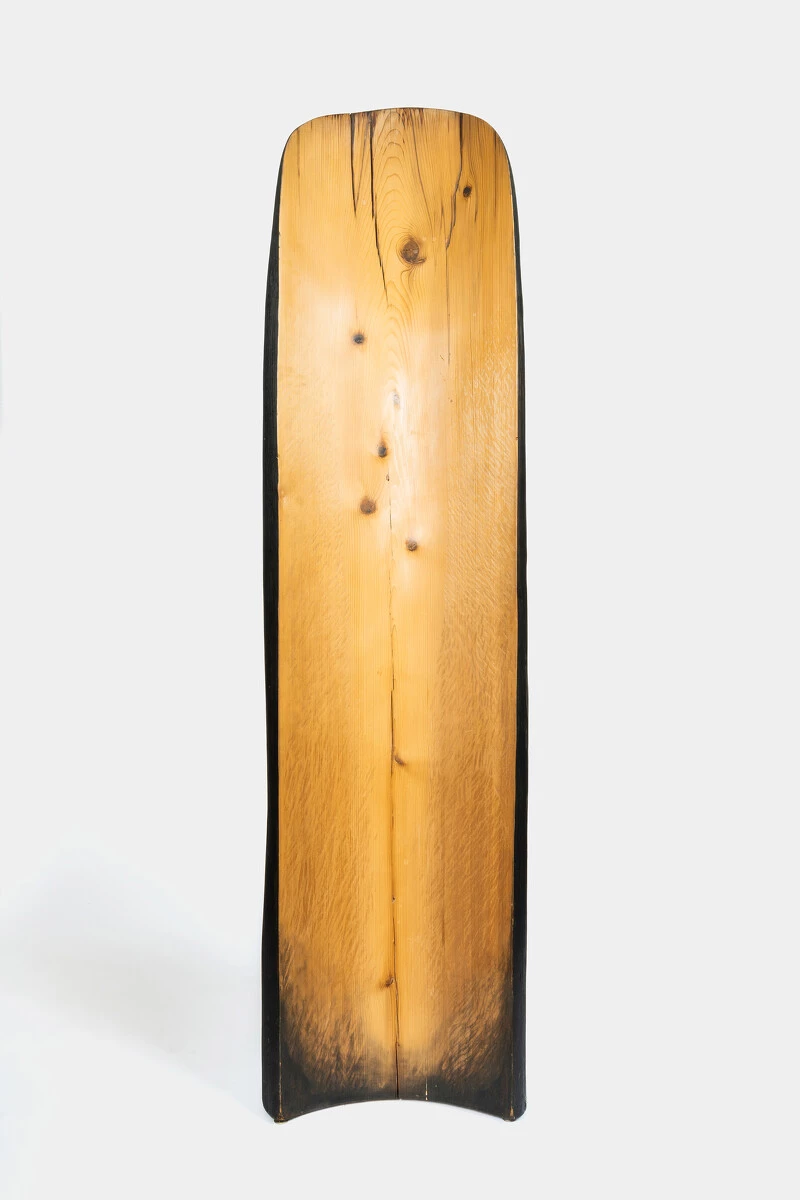
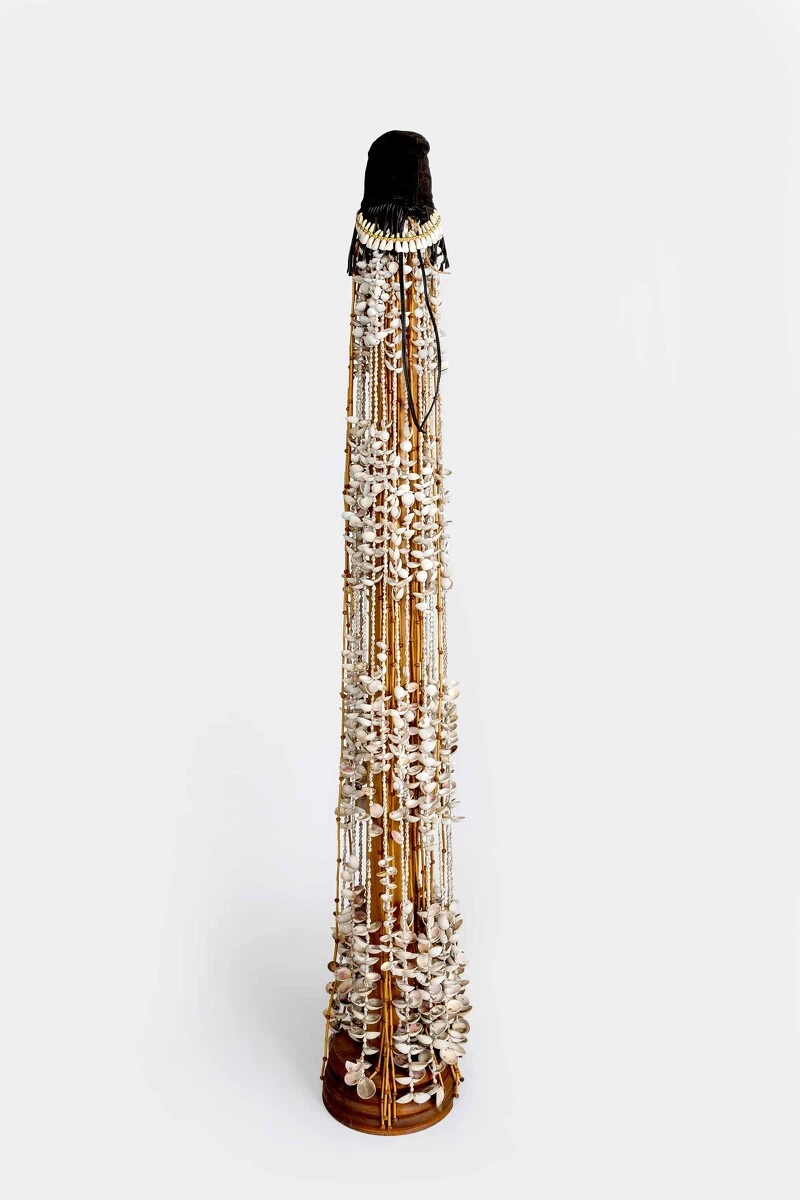
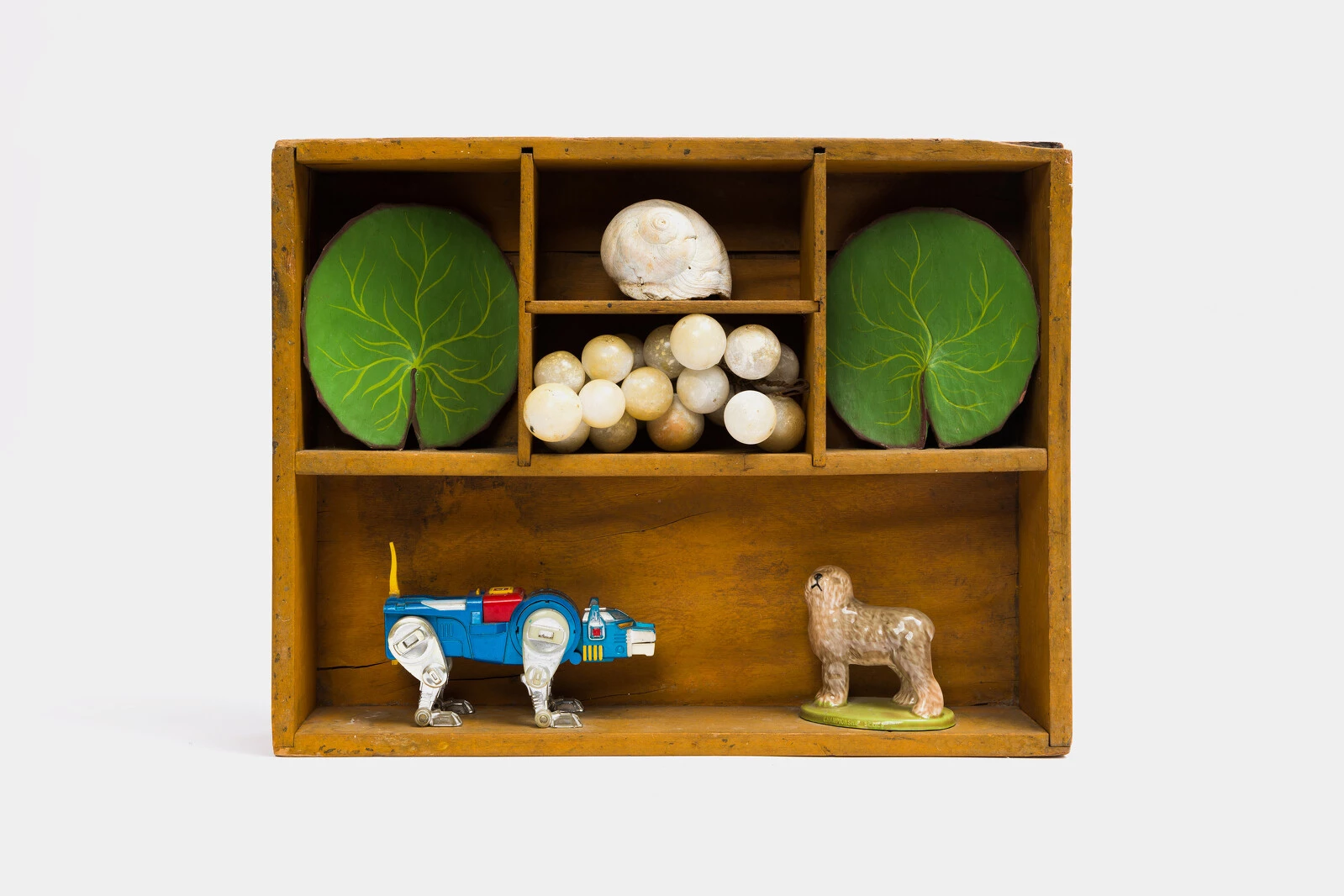
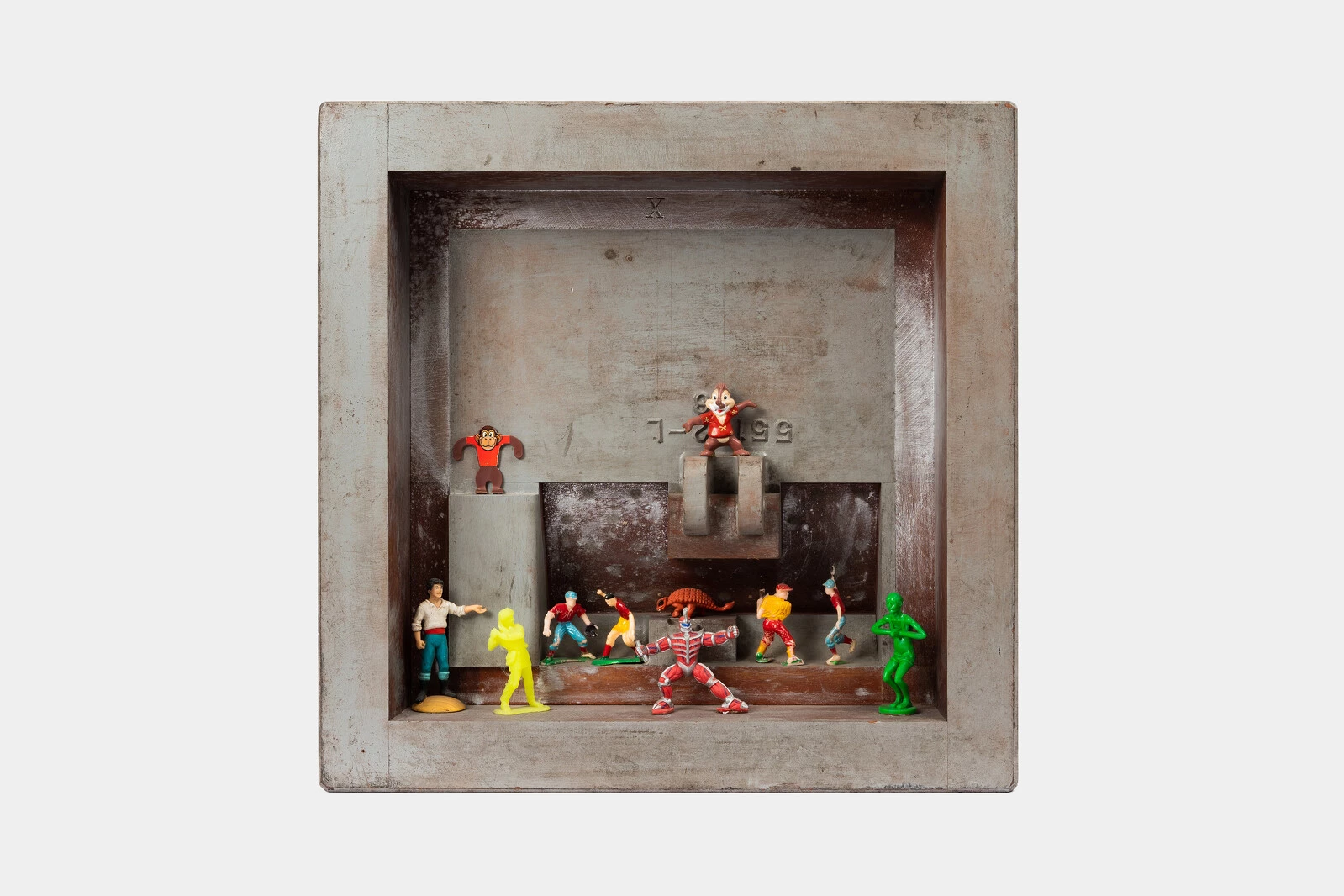
For 50 years, Kenzi Shiokava’s sculptural practice revolved around a central preoccupation: the recovery and transformation of castoff materials. His studio—a cavernous warehouse in Compton and an artwork in and of itself—brimmed with items salvaged from secondhand stores, the street, and the shore: action figures, telephone poles, and driftwood among them, all awaiting reincarnation as wooden totems and assemblage. Through intuitive acts of carving and arranging, the artist unearthed what he described as the “inner movement” of everyday objects, revealing their spiritual vitality and reinvigorating them with life.
Kenzi Shiokava is the artist’s first solo museum exhibition, gathering over 50 sculptures made across five decades, from the 1970s to the 2010s. The presentation is anchored by two core bodies of work: abstract totems meticulously carved from wood and enigmatic box installations animated by toys, dried plants, and stones. The exhibition underscores the transcultural nature of Shiokava’s practice, which melds the aesthetic sensibilities of wood carving in Japan, assemblage in South Los Angeles, and multiple belief systems, including Candomblé, Catholicism, and Zen Buddhism. Deeply attuned to his materials, Shiokava allowed them to guide his sculptural process, which he compared to archeology—both patient practices of excavation, recovery, and revelation.
The exhibition is accompanied by the first monograph dedicated to the artist. Designed by IN-FO.CO, this richly illustrated publication features essays by Nolan Jimbo, Naima J. Keith, Aram Moshayedi, and Michiko Okano, which provide an overview of Shiokava’s oeuvre while drawing out key threads, including the archeological impulse at the heart of his work, his longtime friendship with artist John Outterbridge, and his practice’s resonance with religions in Brazil and Japan. The catalogue also includes full-color reproductions of exhibition artworks, including some that have never been photographed or published, as well as a selection of rare materials sourced from the artist’s archives.
Kenzi Shiokava is organized by Nolan Jimbo, Assistant Curator.
About the Artist
Kenzi Shiokava was born in 1938 in Santa Cruz do Rio Pardo, Brazil, to parents who had immigrated from Kagoshima, Japan. After spending his early adulthood in São Paulo, Shiokava departed in 1964—narrowly evading the military coup d’état in Brazil—and relocated to Los Angeles just months prior to the 1965 Watts Rebellion. He earned a BFA from the Chouinard Art Institute (now California Institute of the Arts) in 1972 and an MFA from the Otis Art Institute (now Otis College of Art and Design) in 1974 before spending the next five decades working in Los Angeles. He served as a longtime artist-in-residence at the storied Watts Towers Arts Center, where his peers included artists John Outterbridge, Noah Purifoy, and Betye Saar.
Solo exhibitions of Shiokava’s work have been presented at Ben Maltz Gallery, Otis College of Art and Design (2019); Watts Towers Arts Center (1996); and Chouinard Gallery (1972). His work has also been shown in group exhibitions, including Not All Travellers Walk Roads—Of Humanity as Practice, 36th Bienal de São Paulo (2025); À Cris Ouverts, Les Ateliers de Rennes—Contemporary Art Biennale (2018); Transpacific Borderlands: The Art of Japanese Diaspora in Lima, Los Angeles, Mexico City, and São Paulo, Japanese American National Museum (2017); Made in L.A. 2016: a, the, though, only, Hammer Museum (2016); Civic Virtue: The Impact of the Los Angeles Municipal Art Gallery and Watts Towers Arts Center, Watts Towers Arts Center (2012); L.A. Object and David Hammons Body Prints, Tilton Gallery (2006); and Four Artists, Brockman Gallery (1988). Shiokava passed away in 2021 in Los Angeles.
Funding
Lead support for Kenzi Shiokava is provided by the Harris Family Foundation in memory of Bette and Neison Harris, the Zell Family Foundation, and Cari and Michael Sacks.
Major support is provided by the Henry Luce Foundation.
Generous support is provided by Gay-Young Cho and Christopher Chiu and Jarl and Pamela Mohn.